How Much Should It Cost to Move a Destination Trailer?

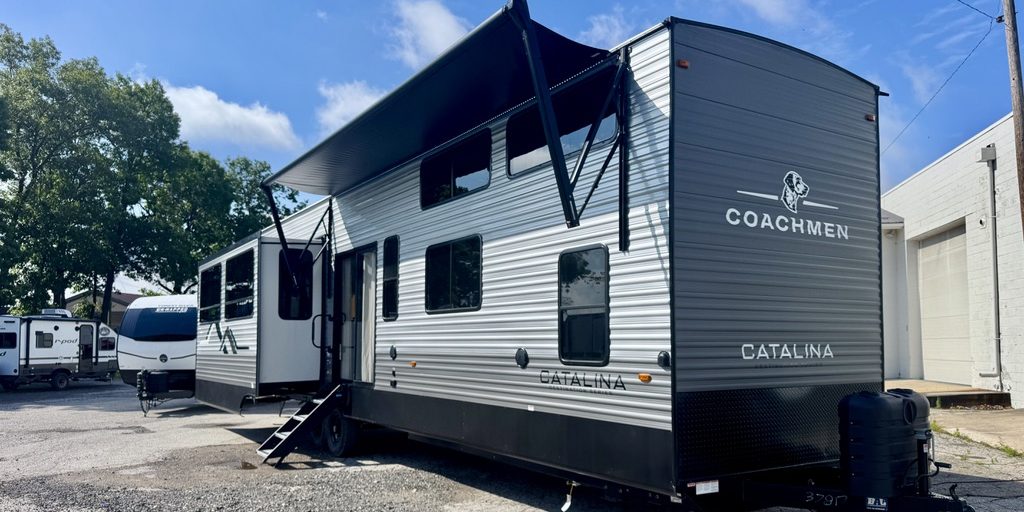
One of the biggest benefits of owning a destination trailer is that you’re probably not planning to move it very often. (At least, I hope you’re not. Because if you are, then you may want to look at a different type of RV.) The goal for a destination trailer is normally to find a campground or seasonal site you love. Basically, a more permanent spot. Then you get everything set up exactly how you want it — and hopefully leave it there long enough to forget what a pain it is to move a giant RV like a destination trailer.
As they say, though, all things come to an end, and eventually that stationary home on wheels may need to dust off those tires and roll somewhere else. Maybe you’re changing seasonal sites, selling the trailer, bringing it home, or moving it to another state. Regardless of the reason, that’s when you realize that something designed to sit comfortably in one place can still require a surprisingly complicated and potentially expensive trip down the highway.
So, how much should moving that big rig cost? Realistically, there isn’t one magic number to go by. Also, if you don’t have the truck or skills to pull that trailer, then you have to turn to a professional RV transport service. And those rates can run from about $1 to more than $4 per mile. That’s useful for some initial math, but with a destination trailer, the mileage may only be the beginning.
So, let’s walk through some of what can affect what you’ll pay to move your destination trailer from point A to point B.
Short Moves Aren’t Always Cheap Moves
It seems logical that moving a trailer 30 miles should cost almost nothing compared with moving it 1,000 miles. Obviously, the longer move should cost more overall for a destination trailer. (Right?) But short-distance transport can have a surprisingly high cost per mile.
To complete a short move, the transporter still has to get to your destination trailer, hitch or load it, inspect the setup, secure everything, drive to the destination, and unload it. Those fixed costs don’t disappear because you’re only going across town.
That’s why some companies use minimum charges or quote shorter moves as a flat price instead of simply multiplying mileage by a rate. If somebody has to spend half a day moving your trailer 25 miles, you’re paying for more than 25 miles of fuel.
Remember, moving RVs is a business, and they have to make money to keep the doors open — or in their case, the wheels rolling. So, they need to make a profit for every move. That’s also why the per-mile rate can drop on longer hauls, because those fixed costs are spread across more miles.
So, I always recommend asking for the total price when you get quotes, or getting as close to that number as possible in a written estimate, rather than becoming too obsessed with the per-mile number. And if you can get a breakdown of the costs to compare with other options, that’s even better.
Size and Weight Matter a Lot to Move a Destination Trailer
Destination trailers aren’t exactly known for being tiny. Many are long, heavy, and packed with residential-style features because they’re designed to prioritize living space rather than frequent travel. That means the transporter needs an appropriate truck, hitch, equipment, and enough capacity for your specific trailer. The heavier and larger the trailer, the fewer vehicles and drivers may be suitable for the job.
Having owned two different fifth wheels and subsequently needing to upgrade trucks to properly tow the second one because of the extra weight — despite our original truck being a 3500 dually — my wife and I know firsthand how much the right truck for the job matters.
That was an expensive education, but it’s exactly why I wouldn’t hire somebody simply because they own a big pickup. Ask what equipment they’re using — make, model, and year — and make sure it’s properly rated for your destination trailer.
Then, once you know what they have to use, understand that if your rig is on the higher end of the weight spectrum, not all drivers, trucks, or companies may be able to properly move your RV. That can be one reason some quotes may seem astronomically more expensive than others.
My wife and I know someone with a moving company, and he has several trucks. I asked him once about the business, costs, pricing, etc., and he basically confirmed that he has some smaller, more fuel-efficient but less powerful trucks. To make a similar profit, he can charge less per mile after his one-time minimum fees. Subsequently, when we sold our second truck and needed someone to move our second fifth wheel to the dealership, he was my guy.
Where the Trailer Is Sitting Can Change the Quote
Remember all that stuff you did to make your destination trailer feel less like an RV and more like a second home? The deck, skirting, supports, hookups, stairs, furniture, outdoor kitchen, and whatever else has accumulated around it may now need to get out of the way. A trailer sitting in an open storage lot is considerably easier to collect than one tucked into a tight campground site surrounded by trees, permanent-looking structures, and neighbors who have been there for 20 years.
Access matters at the destination too. A transporter needs enough room to move and maneuver the destination trailer into its new location, and difficult backing, narrow roads, steep grades, soft ground, or limited clearance can complicate the job.
Send photos and accurate information when asking for quotes. A surprise 42-foot destination trailer wedged between two trees isn’t the kind of surprise that’s likely to make your bill cheaper. Once you send photos, confirm whether you need to move anything before transport or whether it could result in an extra fee.
Don’t Assume the Quote Includes Setup
This is something I’d verify before comparing prices.
One company may quote you strictly for transporting the trailer from Point A to Point B. Another may include some amount of positioning or setup at the destination. Disconnecting utilities, removing stabilization, reinstalling supports, leveling, reconnecting utilities, or dealing with decks and skirting may be completely separate.
That is why I said to get a breakdown of the costs in each quote you receive. Always ask exactly what’s included and get it in writing, even if it’s simply by email.
If one quote is $300 cheaper but leaves a giant destination trailer sitting in the approximate vicinity of your campsite while another places it where you want it, those aren’t really equivalent quotes.
I’d want to know where the driver’s responsibility begins and ends before handing over any money.
Permits and the Route Can Add Cost
Most standard RVs are designed to travel on public roads without turning every trip into a special-hauling operation. But dimensions matter, and particularly large or unusually configured units can create additional routing or permit considerations depending on the trailer and where it’s traveling.
The route itself matters too. Mountain roads, tolls, ferries, restricted roads, difficult campground access, or long distances away from major transport routes can affect pricing.
This is another reason to give the transporter the exact year, make, model, dimensions, and weight rather than saying, “It’s basically a big travel trailer.”
Destination trailers may tow similarly to conventional travel trailers, but they’re often larger and heavier and are designed much more around extended stays. So, always let them know that it is a destination trailer in addition to providing the size and weight.
Make Sure You’re Hiring a Legitimate Transporter
If you’re paying somebody to move a large, expensive RV, I’d want more reassurance than a truck photo and a Facebook profile. And I’d stay away from that cousin or friend that has a big truck and says they can do it.
Ask about commercial insurance, the company’s transport experience, and what coverage applies if the trailer is damaged during the move. For interstate commercial transport, you can also verify a carrier’s operating information through the Federal Motor Carrier Safety Administration.
In addition to getting the quote and terms in writing, I’d also photograph or take a video of the exterior before the trailer leaves so there’s a record of its condition.
The cheapest quote becomes considerably less attractive if something happens and you discover there wasn’t appropriate coverage.
Prepare the Trailer Before Moving Day
A destination trailer that hasn’t moved in three years shouldn’t automatically be treated like it’s ready for a road trip tomorrow. Like most vehicles, if something hasn’t moved or truly been maintained, it may be in less-than-optimal condition for the road.
Inspect the tires, pressure, wheel bearings, brakes, suspension, lights, hitch components, and other running gear as appropriate before the move. Retract the slides and awnings, secure loose items inside, disconnect utilities, and remove anything around the site that could interfere with departure.
I mention the running gear and other upkeep tips in my destination-trailer maintenance guide. Basically, what I say is not to ignore or deem irrelevant the gear underneath your seasonal home, because if you do, the day you suddenly need all of it to work perfectly, it may not.
If possible, start that inspection a few weeks ahead of time so you have time to fix, tighten, replace, or adjust anything that needs extra care. Moving day isn’t the time to discover the tires aged out two summers ago.
Get More Than One Quote
For something this variable, I’d get a few quotes and make sure every company is pricing the same job. Some companies may have more of a standard rate online or on paper but then end up with a higher quote for a destination trailer.
Give them the exact trailer, pickup and delivery addresses, site conditions, approximate dates, and what you expect them to do at both ends. Then ask whether the quote includes fuel, tolls, permits if needed, insurance, positioning, and any minimum or service charges.
If you’re budgeting before you even know where the trailer will go, using roughly $1 to $4 per mile gives you somewhere to start. Just give yourself additional room for short-haul minimums, unusually large trailers, difficult access, setup, or other complications. Personally, adding another 15 to 20 percent to the higher-end mileage estimate would give me a little breathing room for rough budgeting. If I’m OK with that number, then I may be pleasantly surprised when the official quote arrives. Maybe.
The Mileage Is Only Part of the Move
Moving a destination trailer can be as simple as hitching it to the right truck and relocating it to another campground. Or it can involve site preparation, old tires, tight access, additional labor, and a trailer that hasn’t seen pavement since that old unbreakable Nokia phone was all the rage.
That’s why I wouldn’t ask only, “What’s your rate per mile?” I’d ask what the entire move is going to cost. Then I’d confirm exactly what insurance and coverage apply and get everything in writing, preferably via email.
Destination trailers are great at staying put. When it’s finally time for yours to stop being sedentary, paying a little more for the right person to move it safely is more important than squeezing every cent you can out of the wrong company or driver.
Gabriel Rivero
You might also like


