Managing Your Destination Trailer in Hurricane Season

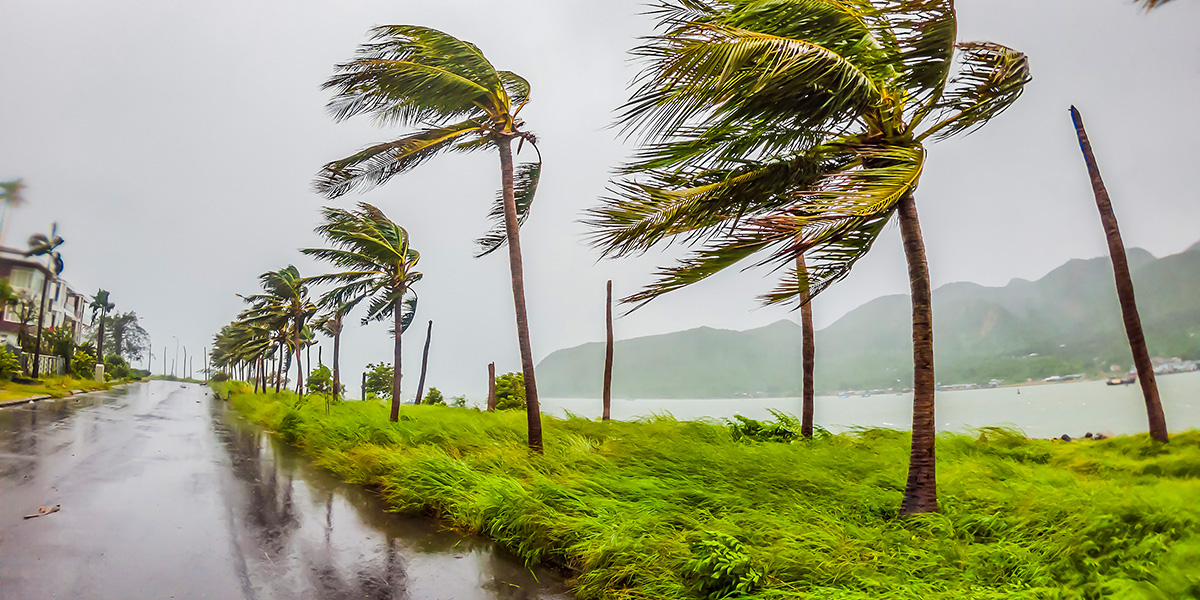
A destination trailer has the look and feel of a small vacation home, but when hurricane season arrives, the truth hits: It is still an RV. While that may feel daunting in the face of impending storms, it is much to your advantage. Unlike a permanent coastal home or trailer, a destination trailer can be moved out of harm’s way. Of course, it will require a little more effort than the more standard, moderately sized RVs.
The key to any hurricane preparation is having a plan in place long before a storm is forecast. So, let’s talk about that.
Move It or Secure it?
Destination trailers are often parked for months at a time, even years. The goal here isn’t to go exploring the landscape. The idea is to find your paradise, and park it there. Done.
So, what do you do when your paradise is along a hurricane belt?
You have to pick your poison. Move it or secure it? This of course depends on your lifestyle, location, and access to a tow vehicle. If you don’t have the means to move your trailer on short notice, it might be best to plan for securing it as thoroughly as possible.
If you live in your destination trailer, or reside nearby, and have all the means and desire to move it to safety- plan your evacuation route accordingly. But remember: You won’t be the only one trying to get out of town on short notice. Be ready to tow your beast in heavy traffic.
If you have the means, but no desire to tow it yourself, consider using a tow company. Make sure you know their hurricane policy ahead of time — and their pricing. They will likely require a lot of notice during severe weather.
If You Decide to Move Your Destination Trailer in Hurricane Season
Know where you would go. Moving “inland” sounds simple, until you realize that thousands of other people are doing the same thing.
Choose several potential relocation areas before hurricane season really sets in. Look for campgrounds or storage facilities farther inland and outside flood planes. Remember, the most detrimental force of a hurricane is the rainfall and flooding that can occur, not just the wind. You are more likely to suffer damage from severe flooding.
If You Decide to Secure Your Destination Trailer in Hurricane Season
OK, so you’ve decided to take a chance. Seriously, that’s a totally reasonable option, but now you have to secure your rig. One option is to tie it tight and securely to your insurance policy. But that isn’t available to everyone. Especially in hurricane-riddled areas like Florida.
For the rest of us, we will need to protect our assets in physical ways.
- Retract all slide-outs and awnings.
- Remove or secure exterior accessories, including stairs, skirting, patio furniture, grills, satellite dishes, bikes and storage boxes. Anything loose around the site can become dangerous debris when the winds increase. A loose item can become a projectile.
- Make sure the trailer is property leveled and supported according to the manufacturer’s recommendations. Stabilizer jacks can help reduce movement, but they are not designed to anchor an RV against hurricane-force winds.
- Consider using a tie-down or anchoring system. Make sure all straps and connection points are in good condition. Never improvise by attaching traps to bumpers, awning arms, roof components or other parts of the trailer that were not designed to handle those loads.
- Lower the center of gravity by filling your fresh and gray water tanks to reduce risk of tippage.
- Reinforce entry points: Use caulk to reinforce any seals where water ingress may become a problem in heavy, prolonged rains.
- Trim surrounding branches or dead tree limbs that could fall on your rig during a storm.
- Disconnect water and electric to minimize the risk of electrical damage, leaks, or fire hazards,
- Close and lock every door, latch, and window.
The Importance of Timing
There is a natural temptation to wait for certainty. Maybe the storm will turn. Maybe it will weaken. And maybe the campground will be fine. And much of the time, all of those things happen.
But destination trailers are large, heavy, and slow to prepare for travel. If you’re plan is to move yours, waiting until an evacuation order is issued may leave you trying to tow your cumbersome RV through traffic, rain, and wind.
Give yourself time to be wrong about your predictions. The worst thing that can happen is that you lose a little time. But if you wait too long, you can lose a lot more than that.
The Most Important Thing
Believe it or not, it’s you. Your destination trailer is nothing without you in it. So, don’t stay. I know it’s tempting. How else can you keep your asset, or home, truly protected? But think seriously: You can’t protect anything if you’re injured or worse. After Hurricane Helene tore through my home in Asheville, North Carolina, I came across our neighbors travel trailer. It was miles from the campground, dumped unceremoniously upside down, inside out and completely flooded. I teared up as I thought of Eddy, the elderly disabled man who lived inside it. Luckily, he evacuated to a shelter right before the storm. If he stayed, he surely would have perished. The forces at work during a hurricane can render entire cities unrecognizable. And a destination trailer, no matter how large, is no match for it.
Olivia de Soria
You might also like


