A Buyer’s Guide to Fixer-Upper RVs

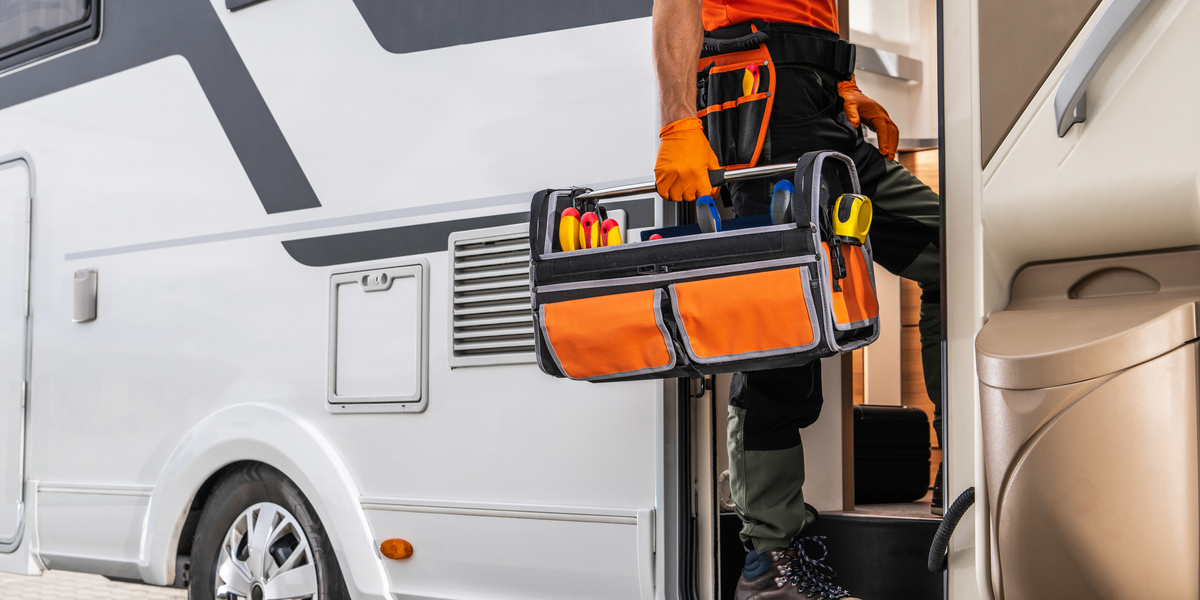
For some, shopping for that next great RV deal means looking for a great fixer-upper; however, there’s a big difference between units that can be easily repaired and evidence of water damage that can spell mold or unseen damage. Your own tolerance for fixing things that were not kept up can determine if an RV is something worth tackling or one worth passing on.
Even with the newest RVs, the advice for shopping is the same: start at the road and work your way up. Looking at tires, suspension, and the general condition of the metal underpinnings can give you a good place to start. To help, we sought out the advice of Steve Hingtgen from Vintage Trailer Supply, who sees RVs from all sides and has some great tips to share.
Check the Seals and Roof for Water Damage
When inspecting an RV, look at any place the RV has a hole in it where a door, cabinet, or window. All RVs require routine maintenance of the exterior seals, but not all RVers perform these inspections. Water intrusion is the bane of all RVs. While you could re-seal places that need it, if there are signs that the seals are not in good shape, this could spell trouble beneath the surface.
One of the areas to be particularly careful with is the roof. If you see a flexible roof material that’s particularly wrinkled, this could be a sign that the roof material has come unglued from the structure beneath it. While this can be relatively simple to resolve, it can also cause water intrusion or other more significant and sometimes hidden damage.
Know What You’re Willing to Repair
The most important aspect of the whole process is to be realistic. If there are systems that aren’t functional, or, even evidence of water intrusion, it’s almost invariable that the repair may not be just a simple fix. Water intrusion into the wall of a metal-skinned, wood-framed RV might just mean fairly basic carpentry skills, but water intrusion into the wall of a laminated RV can be a whole different enchilada.
It’s important to be aware of your tolerance for making the kind of repairs that may be necessary to get that fixer-upper fixed up, but also the budgetary potential.
Define Your Goal for the RV
What are you thinking of doing with your RV? This is important no matter what kind of RV you’re buying, from the latest and greatest to a vintage beauty. But there is another aspect that Hingtgen advised being cognizant of: knowing your goal with this RV purchase. If you’re a DIYer or fixer-upper type and love to tinker, there are various stages of what might make sense.
Steve Hingtgen warns that buyers should also be realistic about interior layouts, noting that a trailer advertised to ‘sleep two’ may be impractical if both occupants cannot easily enter and exit the bed without waking one another, and that specific models, such as a 16-foot Airstream, may not be comfortable for extended periods.
Check Parts Availability Before You Buy
If the RV you’re shopping for is relatively new or modern, then it may be easy to get any repair parts that you might need if there is a component that’s not working. In the worst case, a broken component might just need to be completely replaced, which would involve buying and installing that replacement.
In some cases, a broken component won’t keep you from going camping, so you tolerate this until it can get fixed. This would be an RV you intend to go camping in soon or immediately. But there are also RVers looking for a project RV, which is particularly true in the world of vintage campers.
Some people buy an RV with the expectation of having a long-term project rather than just wanting a deal on a rig they can go camping in soon. This can also be true of a newer RV that you want to update or modify. You might be able to camp in it right away, but the ultimate dream is a complete refresh.
What to Physically Inspect
Steve Hingtgen strongly suggests opening cabinet doors at the base of cabinets to see if there are signs of water intrusion. Also look for evidence of rodents — droppings and stains can mean they’ve been there, and that they may still be.
“Any time you see a leak, like a little water on a window sill, the truth is that water can come from higher. Water follows capillary action.”
While you’re here, check for leaks in the plumbing. If they’ve been mitigated, look for water damage here, too. Plumbing systems are susceptible to failure due to freeze cycles, and Steve Hingtgen suggests looking for evidence of water damage under cabinets even if internal leaks appear repaired. A lack of proper winterization, particularly in units that have been sitting unused, poses a high risk for hidden plumbing damage.
Make sure to get the roof inspected for penetrations or compromised structure, even when at a dealership, noting that improper installation of add-ons like solar panels can create significant leak points. Open and close every window to check for hardware failure and signs of water infiltration, noting that moisture in window sills may actually originate from leaks located higher up in the wall due to capillary action along structural members.
Know your budget
If you’re looking for a sweet deal in something used and have some tolerance for repairs, that can be very different than finding something that is really inexpensive and needs a lot of work. No matter what condition a used RV is in, there is likely going to be something that needs to be taken care of, and the combination of your goals and the things that need to be repaired can greatly affect your budget and outcome.
Older RVs also have an issue in that many spare parts are no longer available. Parts used to be available for years, but now the change in the supplier landscape means that even RVs that aren’t that old may require completely replacing an appliance, for example, instead of simply repairing it, according to Hingtgen. That can get expensive, depending on your budget.
These kinds of repairs can also involve cabinet work and other trades. So if the stove on an older RV isn’t functioning, the solution might be replacing the whole thing, but you might not be able to find one that’s the same size, which can mean carpentry comes into play.
Find your tribe
Another thing that can be very helpful in finding that great fixer-upper is to find others who have done the same thing. There are groups on Facebook and Reddit for just about every brand of RV, including many for vintage models. But there are also enthusiast groups for newer brands and even models.
One way you might find challenges or resources for any particular RV brand or model is through a group on social media.
Selecting Your Fixer-Upper
Sometimes a great deal can be found in an RV that the insurance company declared a total loss, as their tolerance for risk may be lower than your own. What was too expensive to fix for an RV insurance provider can just be a day in the shop for you, depending on you. What defines a super deal for one buyer might be something to avoid for another, and that can boil down to your own aversion to risk, how handy you are, and your ultimate goals for the RV itself.
Tony Barthel