Shenandoah National Park: RV Camping and Travel Guide
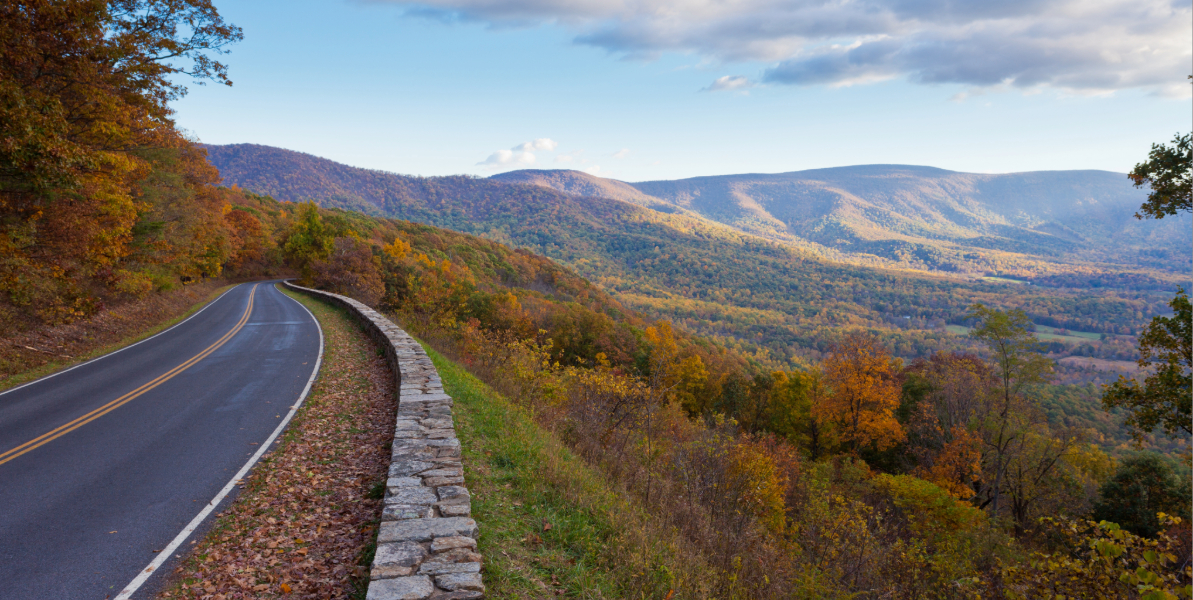
If Virginia is “for lovers” then Shenandoah National Park is an easy target for Cupid’s arrow. Looking at the colorful deciduous trees, cascading waterfalls, spectacular vistas, seasonal wildflowers, and 500 miles of hiking trails, you’d never guess you were a mere 75 miles from the hustle and bustle of our nation’s capitol. The park protects 200,000 acres of high country, a safe and beautiful haven for deer, songbirds, and black bear, as well as those of us who love retreating to the mountains to simply wander.
For those looking to wander, explore this guide to Shenandoah National Park’s scenic drives, hiking trails, wildlife viewing, and seasonal activities.
Why visit at Shenandoah National Park
After a 34-year congressional battle to establish this gorgeous wilderness as a national park, Shenandoah was finally established in December 1935 – with construction on the Blue Ridge Parkway starting shortly thereafter. Beyond its storied history, Shenandoah National Park spans a wide, scenic landscape that’s ideal for exploration. The park stretches for just over 100 miles along Skyline Drive in the Blue Ridge Mountains from near the town of Front Royal in the northeast to near the city of Waynesboro in the southwest of Virginia. Its mountains rise between 3000 to 4000 feet above Shenandoah Valley, with some of the rocks exposed in the park dating back 1 billion years, making them among the oldest in Virginia!
Scenic RV Drives
The 105 miles of Skyline Drive is the only public road through the park, and takes most folks about 3 hours to travel. It is a scenic drive in and of itself, with numerous viewpoints, hikes, and campgrounds along the way. The road is open 24-7, unless there is inclement weather that prevents safe travel – always check the NPS Alerts before driving this road. There are 4 main entry points for vehicles:
- Front Royal Entrance Station (Mile 0) via Rt. 66 and 340 in Front Royal, Virginia.
- Thornton Gap Entrance Station (Mile 31.5) via Rt. 211 near Luray, Virginia.
- Swift Run Gap Entrance Station (Mile 65.5) via Rt. 33 near Elkton, Virginia.
- Rockfish Gap Entrance Station (Mile 104.6) via Rt. 64 and Rt. 250.
As you travel along Skyline Drive, you will notice mileposts designed to help you find your way through the park and help you locate areas of interest. The miles begin at 0 in Front Royal and continue to 105 at the southern end of the Park. The largest developed area, Big Meadows, is near the center of the park, at mile 51. Gas and charging stations are limited, so be sure to check your fuel before getting onto the parkway.
Since the park is home to a great deal of wildlife, watch carefully for these animals who may dart across your path without warning. If you want a closer look, be sure to pull completely off the road and stay in your vehicle.
Special Note for RVers: Marys Rock Tunnel at Mile 32.2 has a maximum clearance of 12′ 8″. RVs are welcome, but be prepared to navigate the steep mountainous terrain and surprisingly long downhill switchbacks.
Must-Hike Trails in Shenandoah Park
With over 500 miles of some of the most beautiful hiking trails on the east coast, it can be a bit overwhelming to choose just one. Stay long enough, and you don’t have to! Here are some great options for every skill level:
Easy Trails (Up to 2 miles)
- Blackrock Summit (1 mile loop RT): Hike to a viewpoint on top of a rocky slope with panoramic views of Massanutten Mountain and the Shenandoah Valley.
- Stoney Man Trail (1.5 miles RT): Spectacular views of the Shenandoah Valley, this trail takes you to the second highest peak in the park.
- Turk Mountain (2.2 miles RT): Climb to a mountain summit without a huge effort, as this hike is only 690 feet of elevation gain.
Moderate Trails (3 to 6 miles)
- Dark Hollow Falls Trail (1.4 miles RT): Head down to Dark Hollow Falls, a cascading waterfall over mossy rocks into a shallow pool area right along the edge of the trail, with a steep return.
- Jones Run Falls Trail (3.2 miles RT): This hike gains 1000 feet in elevation and leads you through a serene forest by a mountain stream to a 42 foot waterfall.
- Chimney Rock (3.4 miles RT): Find unusual rock formations, beautiful wildflower blooms and breathtaking vistas.
Challenging Trails (7+ miles)
- Old Rag Mountain: For seasoned hikers only! With adventurous rock scrambles and 360-degree views that make you feel like you’re on top of the world, there’s no wonder why Old Rag is the most popular destination in the park. From March-November, visitors to Old Rag Mountain (including hikers on the Saddle, Ridge, and Ridge Access trails), will need to obtain an Old Rag Day-Use Ticket in advance.
- Riprap-Wildcat Ridge (10 miles RT): If you love a full day of hiking and exploring with less crowds, this trail has your name on it. This very strenuous hike winds through lush forests and over multiple mountain streams.
For bird lovers and bird nerds alike, the park offers designated birding and wildlife viewing sites along the Virginia Bird & Wildlife Trail. And during the warmer months, waterfall lovers are sure to get their fill.
Popular Activities & Nearby Attractions
Spring and summer bring Shenandoah to life, and there’s something for everyone to enjoy. Each season offers unique ways to explore the park:
- Wildflower Weekend Celebration, just in time for Mother’s Day, offers guided hikes and programs which focus on the importance of the several protected flowering plant species in the park.
- Big Meadows Habitat presents ample opportunity to view wildlife or stargaze after exploring the lush, green forests that make up most of the park. This area supports species that cannot be found anywhere else in the park!
- Alternatively, the historic Skyland Resort provides an escape from city life, while hosting dining experiences, evening Ranger programs, and more.
- For cyclists, there’s plenty of places to take your bike or E-bike. You ride along Skyline Drive, Rapidan Fire Road, and all paved areas within the park. However, biking is not permitted on trails, grassy areas, or other unpaved roads.
- For adventure seekers, the park is full of opportunities for climbing and bouldering. There are over 180 miles of trails open to horse use! From spring through fall, arrange for a guided trail ride that leaves from the Skyland area.
- Wildlife exploration stretches beyond the meadows, so bring your RV fishing tackle or binoculars. Seventy of the park’s 90+ mountain streams and tributaries contain 40 wild fish species, notably native brook trout, and hundreds of species of aquatic insects. The park also features more than 190 species of resident and transient birds, including 18 species of warblers!
NPS Campgrounds within the Park
With 4 campgrounds accessible to RV’s inside of the park boundaries, there are many options to choose from. None of the campgrounds offer electric service, so come prepared with charged up batteries and solar power as the park limits generator usage! All campgrounds offer seasonal potable water and trash/recycling, and all except Lewis Mountain Campground offers a seasonal dump station. Some are reservable, while others remain first-come, first-served – as noted below.
Big Meadows (Open Late March through Fall)
Centrally located at Mile 51.2 along Skyline Drive, this campground provides easy access to many of the most popular destinations in the Park, including Big Meadows, Dark Hollow Falls, and Byrd Visitor Center. Campground has pull-through and deep back-in sites which can handle most RVs and a tow vehicle. Flush toilets, coin-op showers, and laundry facilities are available. Sites are by reservation only at recreation.gov.
Lewis Mountain (Open Late March through Fall)
Located at Mile 57.5, Lewis is the smallest campground in the park, appealing to those who want a little more privacy while still staying within a close distance to many of the most popular destinations in the park, including Big Meadows. Campground has 3 pull-through and 27 back-in sites which can handle most RVs and a tow vehicle. Flush toilets, coin-op showers, and laundry facilities are available. Sites are first-come, first-served only.
Loft Mountain (Open Late April through Fall)
Located at Mile 79.5, this campground sits atop Big Flat Mountain in the southern part of the park, with outstanding views to east and west. Two waterfalls and the trails into the Big Run Wilderness area are nearby. Campground has deep back-in sites which can handle most RVs and a tow vehicle. Flush toilets, coin-op showers, and laundry facilities are available. Mixture of reservable and first-come, first-served sites.
Matthews Arm (Open Late April through Fall)
Located at Mile 22.1, Matthews Arm campground is closest to Front Royal, in the northern section of the park. Elkwallow Wayside, with camping supplies and food service, is two miles away. Campground has deep back-in sites which can handle most RVs and a tow vehicle. Flush toilets onsite, but no showers or laundry facilities are available. Mixture of reservable and first-come, first-served sites.
Keep in mind, boondocking with an RV or any other vehicle is prohibited within the park, even in the off-season when campgrounds are closed.
Nearby Campgrounds, RV Parks, & Dispersed Camping
- Shenandoah River State Park is an easy 15 minutes from the north entrance of the park, as well as a couple of national forest campgrounds.
- Several private campgrounds are located just outside of both the north and south entrances, offering full resort-style services.
- Boondocking in the George Washington National Forest to the west of the park is allowed as well.
Seasonal Advice for Visiting Shenandoah National Park
Shenandoah National Park offers 4 distinct seasons, making it a great candidate for all-weather camping in your RV. Although it’s one of the best RV parks to see vibrant autumn colors and chilly temps, the park is just as beautiful (and much less crowded) in the spring when wildflowers pop up and the trees are leafed out. Average spring temperatures range from 35°F in March to 55°F in May.
Summer brings lush, dripping green canopies! The park’s elevation offers a great retreat in the summer months with average temperatures around 65°F between June and August (and much lower humidity than in the surrounding valleys). That same elevation difference, though, can bring real winter weather to the Virginia mountains; when it is raining in the lowlands, the park and Skyline Drive is often blanketed in snow and ice from November through February. The trade off is that the clear skies and leafless trees of winter provide spectacular vistas and surprisingly great wildlife viewing!
There’s enough to explore in Shenandoah National Park that we recommend at least a 5 day visit. If you have time for a longer road trip, follow America’s Favorite Drive along the Blue Ridge Parkway through several beautiful mountain towns and cute villages to explore Smoky Mountain National Park on the southern end of the Parkway. And, we sure to wave to our “hometown” of Boone, NC along the way when you pass on by!
Freedom in a Can
You might also like