Grounding Monitor Interrupters Required for 2026

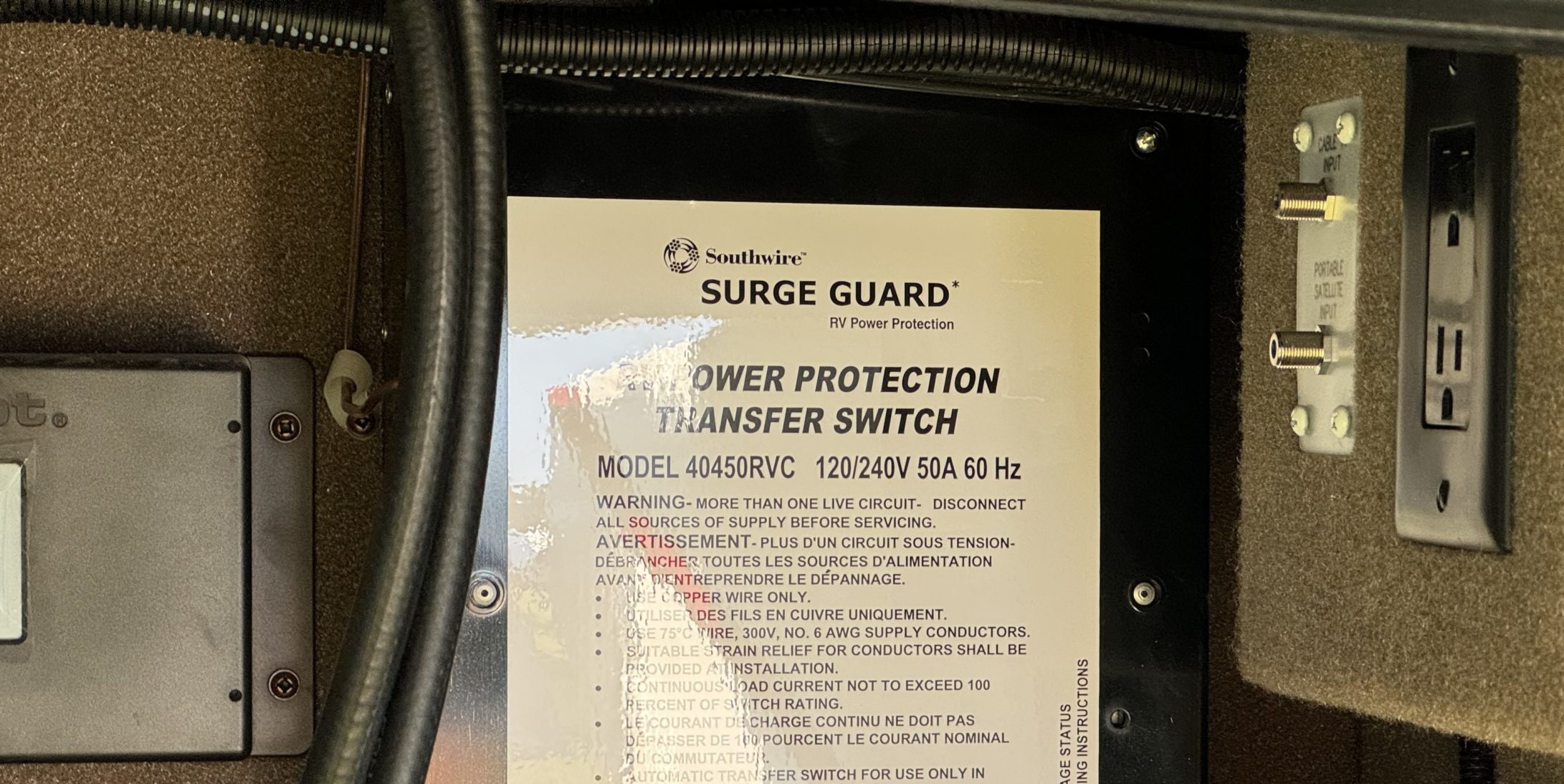
RVing is going to be safer starting with RVs produced later in 2026 thanks to new standards spelled-out in the National Electrical Code, RVBusiness reports. These standards will require all new RVs with 30- or 50-amp service to install grounding monitor interrupters (GMIs). What this does is measure the incoming power and interrupt that if there is improper ground, which can lead to dangerous condition including “hot skin.”
Hot skin is a term used to describe when an RV’s metal exterior, metal frame, or other metal items become electrified. This is a serious safety hazard cause by improper grounding or electrical faults. Essentially, the GMI tests the incoming power to the RV to ensure that it is wired correctly and has a proper ground connection. If the system detects an incorrect wiring or loss of ground it will disable power to the RV.
On the RV, the GMI will address damage to a power cord, which the National Electric Code refers to as a “feeder assembly.” Damage to a power cord and the use of dog-bone adapters, causing a compromised electrical supply, are reasons for requesting this update to the National Electric Code.
On the RV parks and campgrounds side, the GMI will address a loss of ground at the RV pedestal or the presence of electrical voltage on the grounding conductor (wire). Under certain conditions, without the GMI, either of these two items could result in “hot skin.”
When will this change take place?
The 2026 edition of the National Electrical Code was adopted and published in late September. The RV Industry Association plans to set the exact 2026 implementation and adoption dates at the next board meeting which will be held in November of this year.
How did this problem happen?
Not only do RV park electrical systems vary wildly in age, but the condition of those pedestals also vary wildly. Repeated use (people plugging in and unplugging) can make the connection weak. Further, over time, the connections can get dirty or damaged.
Sometimes repairs are made to RV power pedestals by people who may not be totally familiar with electrical wiring, including some work campers or other maintenance people. While this is usually a good repair, it isn’t always.
What if I already have a power management system?
This code will affect RVs built in 2026 and beyond, so it is not a retroactive standard. People such as Mike Sokol, a recognized expert in RV electricity, recommend that all RVers continue to use a power management system, which is commonly referred to as an RV surge suppressor, but upgrade to a more advanced version, like the Hughes Power Watchdog or a comparable device.
Those RVers who have an energy management system (EMS), like a surge suppressor, may be familiar with those devices disabling power to the RV. This happens if they detect a condition like miswiring. But, to this point, those EMS devices are not able to disconnect the ground. The new grounding monitor interrupters will be able to disconnect the ground and is internal to the RV itself.
Sokol also recommends keeping an electrical contact cleaner on hand to ensure that the power connections are clean and making a positive connection.
Another tip for those who have 30-amp RVs might be to bring along a 50-amp to 30-amp adaptor, commonly known as a dog-bone adaptor. The 50-amp plugs often see less use. So, if the 30-amp plug at a site is loose or the connection is lousy, moving to the 50-amp plug can often resolve this.
Tony Barthel
You might also like


