New River Gorge National Park: RV Camping and Travel Guide
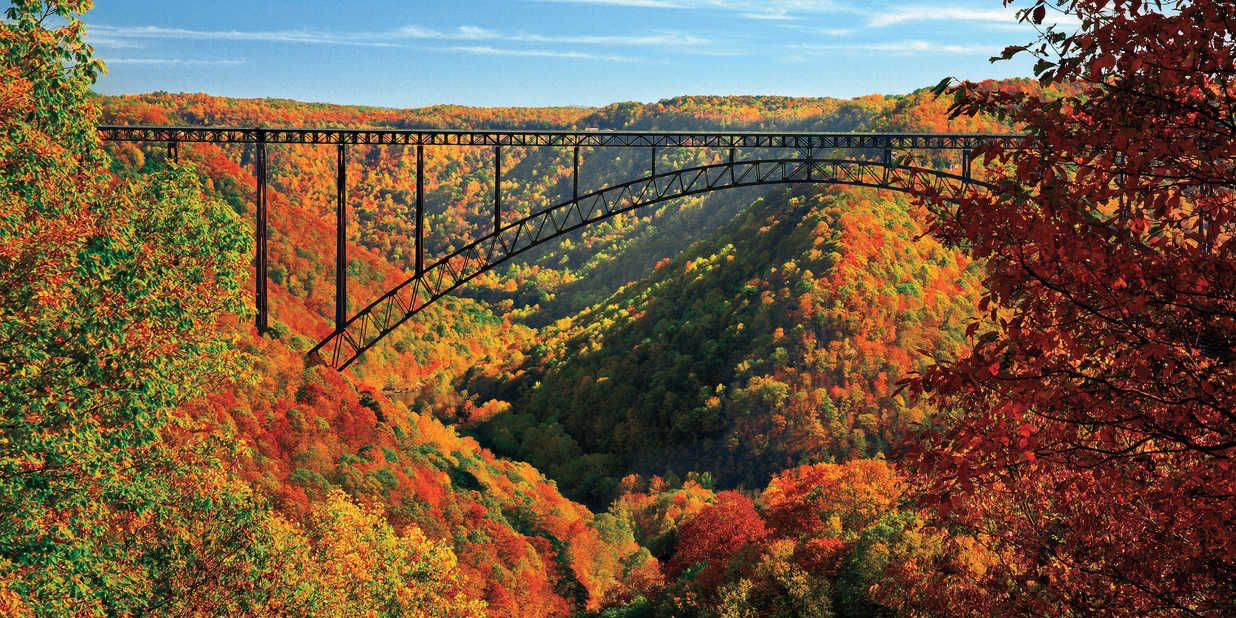
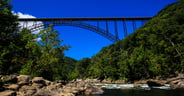

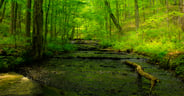

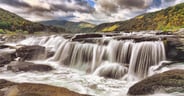
The rugged, whitewater river that runs through New River Gorge National Park is the same that gives this special park its name. Situated in southern West Virginia, the northward flowing New River has carved and continues to cut the deepest and longest river gorge found in the Appalachian Mountains. Slicing through ancient bedrock, this river has created a mosaic of habitats. These range from unfragmented forests and rimrock habitats to forest seeps, wetlands, and mature bottomland forests. Encompassing over 70,000 acres of land along 53 miles of river corridor, New River National Park and Preserve includes some of the oldest forests and most diverse ecosystems in the world, in addition to several well-preserved, historic mining towns.
All this to say, while it’s our nation’s newest national park (approved by Congress in 2021), what defines New River Gorge National Park is that it is provocatively ancient. It’s a place unlike anywhere else an RVer can visit. These remote forests make for spectacular hikes. And on foot, you pass through refuges for endangered mammals, rare birds, and exotic amphibians. While the river and wetlands are perfect for boaters of all types, they also support native fish, mussels, crayfish, and a broad array of other aquatic life.
So let’s take a look at how best to enjoy the New River Gorge National Park by RV, foot, boat, or bike!
Scenic Drives
Point blank, there is no shortage of scenic drives in New River Gorge National Park! Roads lead from mountain streams, waterfalls, and historic mining communities to panoramic views of ancient forests stretching as far as your eyes can see.
Here are several to highlight on your map.

New River Gorge Circle Tour
This 83-mile route includes interstates, divided highways, and two-lane roads. Although much of this three-hour drive is outside of the park, it provides an opportunity to experience both the gorge and the river, along with broad vistas and glimpses of both the past and the present. Two park visitor centers, Canyon Rim and Sandstone, supplement the tour.
Fayette Station Road
This eight-mile, one-way road that takes you back in time before the New River Gorge Bridge was completed. It portrays a fascinating history. There are several pullouts along the way to admire the views of the New River Gorge and the New River Gorge Bridge. There are also roadside exhibits that illuminate the history of the area. A parking lot at the bottom gives access to the New River and more views of the gorge and bridge. An audio tour takes visitors back in time to when coal was king and more than forty coal mining towns lined New River Gorge. Download the audio tour from the website or use the NPS Mobile App.
Driving Advisory: Due to a low-clearance railroad bridge, vehicles over 12 feet in height cannot complete the tour. Trailers may have difficulty crossing the railroad tracks and navigating hairpin curves. Large vehicles, RVs, and trailers are not recommended.
New River Gorge Bridge
This late 1970’s engineering feat solved a major travel challenge — turning a 40-minute drive into a trip of less than 60 seconds. The bridge removed the need to navigate down narrow mountain roads across this river. In doing so, it achieved a work of structural art that is the longest steel-span bridge in the western hemisphere. (It’s also the third highest in the United States.) It’s no wonder why the New River Gorge Bridge is one of the most photographed places in West Virginia!
Visitors can view the bridge from overlooks at the Canyon Rim Visitor Center. The New River Gorge Bridge is a vehicle highway, not a pedestrian bridge. So, you may only walk on top of the bridge on Bridge Day (see below). However, visitors who want to explore underneath the bridge can schedule a tour with Bridge Walk. This company offers three-hour tours on the maintenance catwalk below the bridge.
African American Heritage Driving Tour
This audio tour (via a smartphone app) tells the stories of the many black coal miners, railroad workers, and other community members that helped shape this region. This self-guided auto tour takes the driver to 17 historic sites in Summers, Raleigh, Fayette, and Nicholas counties to learn about the history and experiences of the region’s African American residents. The project was made possible through a partnership with several local and regional organizations and is available through the NPS app for New River Gorge National Park and Preserve.
Grandview
This area provides some of the most dramatic scenery found in the park. Therefore, it is a popular place for hiking, picnicking, and sight-seeing. The Grandview section of the park includes overlooks of the New River, a visitor center (open seasonally), five hiking trails, ranger-led walks and talks, summer outdoor dramas, and picnic areas with playgrounds. Grandview is home to Theatre West Virginia, which features outdoor drama presentations from June through August.
New River Gorge Waterfall Tour
The park offers a wonderful scenic tour which follows the path of eight waterfalls starting north of the park near the town of Gauley Bridge and ending at the famous Sandstone Falls. Four of the falls are accessible from the road (Kanawha Falls, Cathedral Falls, Dunloup Falls, and Sandstone Falls) and four require hiking on trails (Wolf Creek, Butcher Branch, Glade Creek, and Big Branch — see our Must-Hike Trails below). If you want to combine driving and hiking to see all eight waterfalls, we recommend splitting it up over a couple of days as there is quite a bit of both driving and hiking mileage.
In addition to beautiful scenic drives in and around the park, there are two fascinating historic mining areas that visitors can reach by vehicle.

Thurmond Road
During the first two decades of the 1900s, Thurmond was a classic boomtown. Huge amounts of coal flowed into Thurmond from the area mines. This made Thurmond the largest revenue generator on the Chesapeake & Ohio Railway. Today, the town of Thurmond remains untouched by modern development. It is a link to our past, and a town with many stories to tell. Through it, we can experience the impact of the industrial revolution boom and bust cycles.
Driving Advisory: Thurmond Road is winding and narrow at times, therefore large vehicles over 25 feet in length and trailers are not recommended.
Nuttallburg
A bustling mining community by the turn of the century, the town became the focus of national attention in the 1920s when “vertical integration” allowed companies to gain control of all aspects of production. Henry Ford leased the town’s mines to provide coal for his company’s steel mills. Today, it is considered one of the most-intact examples of a coal mining complex in West Virginia and one of the most complete coal-related industrial sites in the United States.
Driving Advisory: The state maintained road to Nuttallburg (Keeneys Creek Road) is narrow, winding, and steep. Some places are paved while some places are gravel. Much of the road is one lane, meaning that drivers will need to pull off the side of the road to allow for passing vehicles. Often there is not enough room to pull off and pass and drivers may need to reverse on the steep road, therefore large vehicles and trailers are not advised!

Must-Hike Trails
Hiking opportunities abound in New River Gorge National Park, with several options for every skill level in all six major areas of the park. A quick stop at one of the park’s four visitor centers can give you some helpful trail information. Here are a few popular options:
Easier Hikes
- Island Loop Trail. Loops around the largest island below Sandstone Falls. The island which was once farmed, grazed, and timbered, and a grist mill once operated here. Today, hikers can observe the natural succession as the old fields transition back to forest. Distance: 0.5 mile loop
- Burnwood Trail. Winds you through the heart of the old-growth forest that escaped the large-scale industrial clearing that most of the modern landscape in Appalachia experienced. These forests act as a window back in time to see what most forests across the Eastern United States would have originally looked like back in the 17th century. Along the way, numbered signs on the trail correspond to the stops on this webpage for hikers to read as part of the self-guided tour. Distance: 1.2 mile loop
Moderate-Level Hikes
- Glade Creek Trail. Follows an abandoned narrow-gauge railroad along Glade Creek and offers an enjoyable stroll at a very moderate grade. Popular with hikers of all ages and abilities who enjoy swimming holes. Distance: 11.2 miles roundtrip
- Kaymoor Miners Trail. The Kaymoor One mine site was once one of the most successful and highest producing mines in New River Gorge; now, it’s the most intact mine complex that remains in the New River Gorge. Starting from the Wolf Creek Trailhead off Fayette Station Road, the trail winds up about 350 feet of elevation and along the middle of the gorge. It connects with the Kaymoor Miners Trail at the mine entrance. From the mine site, 821 wooden steps continue down to the coal processing plant, coke ovens, and Kaymoor Bottom town site near river level. Distance: 4 miles roundtrip, including 821 steps up/down
- Grandview Rim Trail. This is the longest trail at Grandview, connecting Main Overlook with Turkey Spur. Along the way hikers will enjoy many breathtaking views of the gorge and river far below. Distance: 3.2 miles
- Long Point Trail. Traverses field and forest on the way to a rock outcrop with panoramic views of the gorge and New River Gorge Bridge. Most of this trail descends gently through the forest, with just one steep section just before Long Point. Distance: 3.2 miles
More Strenuous Hikes
- Bridge Trail. You can’t go to New River Gorge National Park without a good view of the famous bridge! This steep and rocky trail offers views of the gorge and bridge itself. The trail passes under the bridge and connects to the Fayetteville Trail. Distance: ~2 miles roundtrip
- Fayetteville Trail. Connecting Fayette Station Road, the town of Fayetteville, and Kaymoor Top with hiking access to Long Point, this trail offers several creek crossings and quite a bit of elevation change along the way. Connections can be made to many other trails in the park. Distance: 8 miles roundtrip

RV Parks & Campgrounds
New River Gorge National Park offers five small, primitive — and first-come, first-served — campgrounds which can accommodate small to medium RVs. All campgrounds are free, open year-round, located on maintained gravel or dirt roads in somewhat remote locations. These campsites have picnic tables, fire rings, and grills. No dump stations or potable water stations are available at the campgrounds, but three campgrounds offer an onsite composting toilet.
All campgrounds — except War Ridge, which is located on a ridgetop — are situated on the banks of the New River. Easy access to the river for fishing and boating is availab

le. Swimming is strongly discouraged as the New River has powerful currents, rocky banks and shoals, and sudden drop-offs.
Note: Camping in a nondesignated site or using a walk-in parking lot for RV, camper, or car camping is prohibited.
Army Camp Campground
Located along the banks of the New River at one of its many horseshoe bends. There are 11 sites which can accommodate RV’s ranging from 22-32 feet long. Composting toilet available. Partial shade to full sun sites.
Grandview Sandbar Campground
Located near the banks of the New River, there are 10 sites which can accommodate RV’s ranging from 22-32 feet long. Composting toilet available. Shaded, wooded sites.
Glade Creek Campground
Located near the banks of the New River and the Glade Creek Trailhead, there are five sites which can accommodate RVs ranging from 22-32 feet long. Composting toilet available. Heavily forested sites.
War Ridge/Backus Campground
Located on a ridgetop near Backus Mountain, there are eight sites which can accommodate small RVs less than 25 feet. No toilets available.
Gauley Tailwaters Campground
Located just below Summersville Dam, there are 18 sites which can accommodate RVs (no size limit listed online). No toilets available.
*****
Nearby Babcock State Park as well as the communities of Thurmond, Lansing, and Fayetteville, West Virginia surrounding the park offer services and amenities that are not available within the park, including full hook-up campsites, restaurants, gas stations, grocery stores, and more.
Boondocking options are available in Monongaheala, George Washington, and Jefferson National Forests surrounding the park.
Seasonal Advice
Weather in the Appalachian Mountains can be unpredictable and changes quickly. Always be prepared for the possibility of sudden storms. Elevations within the park range from approximately 750 to 3600 feet.
Weather in the higher elevations is often cooler and wetter than the surrounding area. On average, the warmest month is July (59–78 degrees Fahrenheit), and the coldest month is January (19–38 degrees Fahrenheit). The maximum rainfall (5.3 inches) typically also occurs in July.
April through October offers the most pleasant temperatures, with nights hovering just above freezing in the months of April and October. A visit during the height of fall color can be a very special time to be there, but be prepared for more crowds and less camping options.
The Importance of Being Prepared
Topography can drastically affect local weather conditions. Depending on the time of year and the elevation, you could experience three seasons in a single day. Temperatures can vary significantly between river level and the mountain ridges. Trip planning and weather-appropriate clothing will help ensure an enjoyable visit during any season!
With so much to see and do in this special park, we recommend at least five to seven days in this park, and combine it with a road trip to Shenandoah National Park, Blue Ridge Parkway, and Great Smoky Mountains National Park. Come prepared for whatever Mother Nature brings your way, drink plenty of water at all times of the year, and you’ll have a wonderful time exploring this fascinating NEW national park!
Unique Programs & Opportunities
Guided Bridge Walk Tours
Experience the New River Gorge Bridge from the 24-foot catwalk that is 25 feet beneath the bridge! Tours are 2.5 hours long and include shuttling to the Canyon Rim Visitor’s Center, walking a short path to the bridge, then walking the entire 3,030 foot length of the bridge, and shuttling back to headquarters. Participants are fully harnessed while on the catwalk, so there is no risk of falling. Tours move along at a leisurely pace, so there is plenty of time to stop for photos, and discuss bridge and park features with your guide.
Whitewater Rafting & Kayaking Tours
Several licensed outfitters offer guided trips on the New and Gauley Rivers. Trained guides, equipment, instruction, transportation to and from the river, and meals are provided. Trips vary in length from several hours to several days, and offer different degrees of difficulty — from peaceful float and fishing trips to crashing whitewater excitement. The New River has trips available almost year-round, with the season running from April through October. Ranging from mild pools and riffles on the upper parts to big whitewater rapids in the lower section, the New offers something for everyone.
The Gauley River is more for the whitewater enthusiast, with a number of steep and technical rapids. The main season is early-September through mid-October, though trips are sometimes available at other times of the year. If you are bringing your own boat, the park provides up-to-date river level information.
Bridge Day Annual Festival
On the third Saturday of October, the Fayette County Chamber of Commerce hosts Bridge Day. On this one day a year, the famous New River Gorge Bridge is open to pedestrians. A wide variety of activities draw thousands of people. Visitors experience great views, vendors, BASE jumping, rappelling, music, and more. Bridge Day is not only West Virginia’s largest one-day festival, but also the largest extreme sports event in the world.
Bicycling
The beautiful landscapes and variety of bike routes make the New River Gorge among the most popular destinations for mountain biking trips in the eastern United States. The park currently allows traditional bicycles on several trails. Bicycles are also permitted on the Bluestone Turnpike Trail at Bluestone National Scenic River. E-bikes are ONLY permitted on the Stonecliff Trail. Bike shops, mountain biking trails, outfitters and companies offering guided biking tours of the New River Gorge and nearby areas may be found throughout the region.
Rock Climbing
With over 1,400 established rock climbs in the park, “The New” has become one of the most popular climbing areas in the country. The cliffs at New River Gorge are made up of a very hard sandstone, and range from 30 to 120 feet in height. The rock is very featured, and an abundance of crack and face routes are available, with most of the routes favoring the advanced and expert climber.

Fishing
The diversity of fish in its waters makes the New River an excellent place for anglers. There are several public river access points both within the park and near the park.
Watching Sunrise & Sunsets
Depending on what you want to see during the sunrise/sunset, there are many locations that can give you a glimpse. For sunrise, you want an east facing overlook on the west side of the river. Two great views include Endless Wall Trail-Diamond Point and Grandview Main Overlook.
For sunsets, you want a west facing overlook on the east side of the river. Three great options include the New River Gorge Bridge Overlook at Canyon Rim Visitor Center, Long Point, and the Sandstone Falls Overlook.
Ranger-Led Tours
From hikes and walks to lectures and programs on natural and cultural history, these programs bring the park to life. Join rangers to learn about flora and fauna, railroad and mining history in the area, traditional Appalachian music, and more.
Freedom in a Can
You might also like


