Carlsbad Caverns National Park: RV Camping and Travel Guide
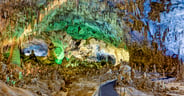
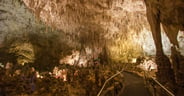
Did you know that the National Park Service manages and maintains 122 cave and karst systems across the globe? It’s OK if you didn’t. (And it’s also OK if you now want to Google “karst system.” We’ll save you the trouble: A karst is an irregular limestone region with sinkholes, underground streams, and caverns.) At one point, all this was new to us as well. When we started exploring the parks with our own RV, we had only heard of a few caves. (Nor did we know that there are six different types of caves.) Now, while every cave is fascinating and unique in its own way, Carlsbad Caverns National Park is one of the big names in the cave world. And there are good reasons why.
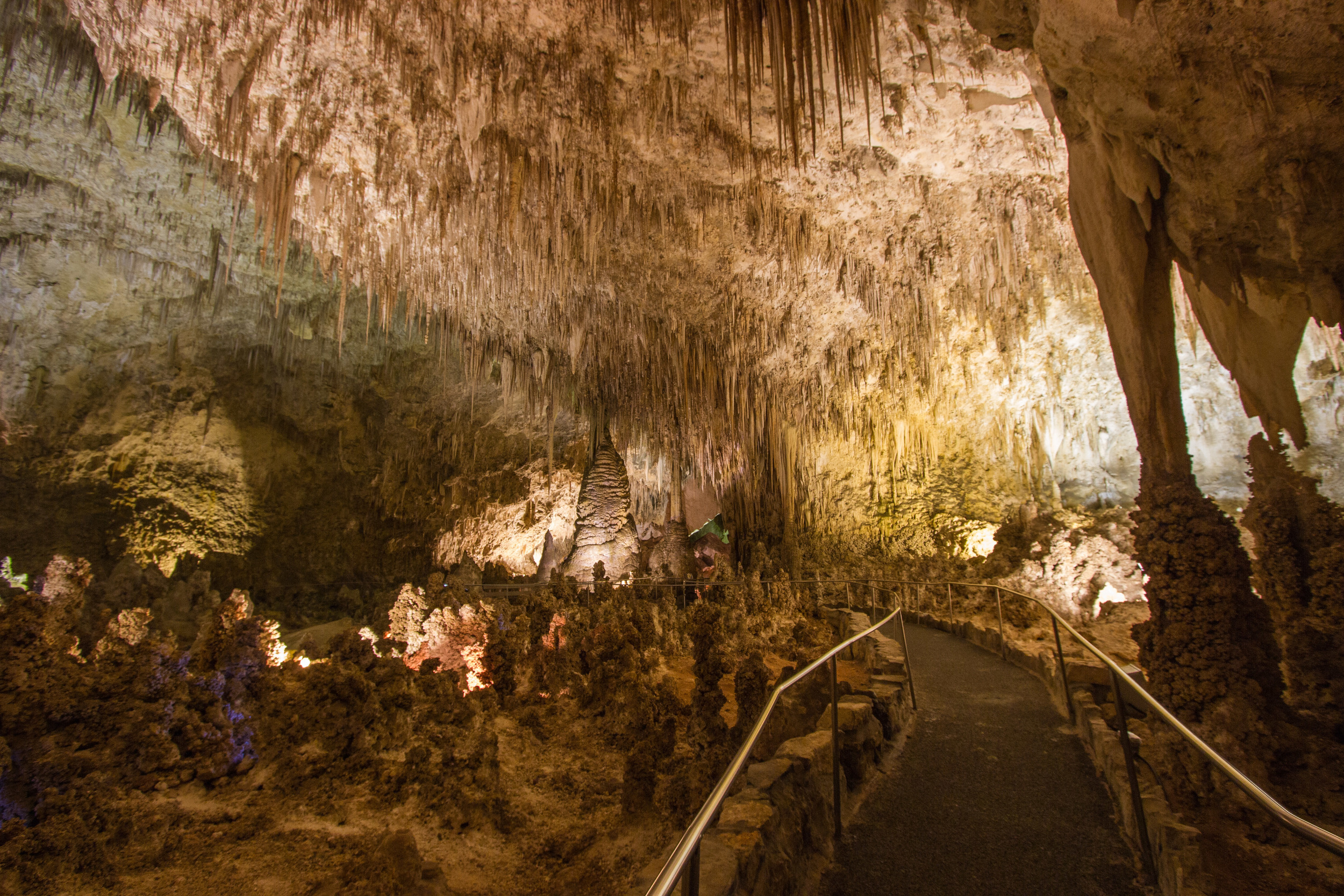
Carlsbad Caverns National Park hosts some of the most spectacular and accessible cave formations in North America. It’s something to behold — a bucket list thing. A thing that you will always remember, as will anyone else you take. All this to say: It’s very worthy of an RV road trip.
So, here are some highlights of this otherworldly park that’s located in the heart of the Chihuahuan Desert of New Mexico.
Scenic Drives
As you might suspect, Carlsbad Caverns National Park does not offer a traditional scenic drive. (Naturally, ou can’t drive through the cave.) But getting there is half the adventure! The scenic beauty heading northeast on U.S. Route 70 out of Las Cruces into the Tularosa Basin allows you gorgeous views and the opportunity to explore White Sands National Park. Further along on U.S. Route 82, you can detour into the fascinating history surrounding Alamogordo, as well as the beautiful Sacramento Mountains and Lincoln National Forest to the north and east. Add a trip along U.S. Route 62 to the nearby Guadalupe Mountains National Park (containing the highest peak in Texas), and you’ll have racked up three national park visits in one RV road trip!
Must-Hike Trails
There are two options for self-guided cave exploration. One trail is pretty easy, but the other is quite challenging for many people. Timed entry tickets for self-guided tours are required to enter Carlsbad Caverns and must be made online. This applies to everyone, even if you are an annual pass holder.
- Take It Easy on the Big Room Trail. This relatively flat 1.25-mile trail allows you to explore the largest single cave chamber (by volume) in North America. You can take an elevator down to this room, or hike to it via the Natural Entrance. Note: For a shorter trail, there is a shortcut which reduces the walking distance to about a half mile. Also, parts of the Big Room Trail are wheelchair accessible.
- Descend and Ascend the Natural Entrance Trail. This 1.25 mile is extremely steep and allows you to follow the footsteps of early explorers as you pass various cave formations. The elevation loss (in) and gain (out) is 750 feet. For a little perspective, that’s equivalent to a 75-story building. Note: This trail is not recommended for visitors with heart or respiratory conditions, and is not an accessible trail.
- Enjoy Above Ground Trails. If caves simply aren’t your thing, you can opt for open air. The park offers several above ground trails. Among them include: Walnut Canyon Overlook, Chihuahuan Desert Nature Trail, Slaughter Canyon Cave Trail, Old Guano Trail, Juniper Ridge, Lower Rattlesnake Canyon, Upper Rattlesnake Canyon to Guadalupe Ridge Loop, Slaughter Canyon, Yucca Canyon, Guadalupe Ridge, and the Guadalupe Ridge Trail.

RV Parks & Campgrounds
There are no RV campgrounds within the park boundaries, and overnight RV parking is not permitted. Primitive camping is allowed in the backcountry only, and requires a free permit which is issued at the park’s visitor center when you arrive.
If you’re not a primitive camper, the closest campground and amenities are available in White’s City, New Mexico. It’s about seven miles away. Also, Carlsbad, New Mexico (about 20 miles northeast of the park) also has a few campground options.
If you’re boondocking, the park is surrounded by Bureau of Land Management (BLM) land and they allow permit-free RV and tent camping.
Seasonal Advice
For over 275 days out of the year, the park greets visitors with gorgeous blue and sunny skies! Temperatures ranging from 90 degrees to over 100 degrees Fahrenheit are typical during summer. So, bring plenty of water, do any outside hiking early in the day, use sunscreen, and wear a hat. If you plan to explore the caves, bring layers as the year-round temperature in the cave is a cool 56 degrees Fahrenheit!
If you plan to visit during the off-season or shoulder season, windy conditions and mild temperatures are common in early spring (March-May). And you’ll encounter frequent rain during monsoon season in late summer/early fall (August-September). During the winter, the Chihuahuan Desert can also be quite cold with occasional snow and icy conditions.

Insider Tips!
Popular Programs & Tours
- Ranger-Led Tours. Even if you plan to explore other parts of the cave system on your own, we highly recommend taking a guided tour first so you’ll learn about cave formations/ecosystems and know what you are looking at when you are on your own. The King’s Palace Tour is the only guided tour currently available – space is limited and reservations are recommended.
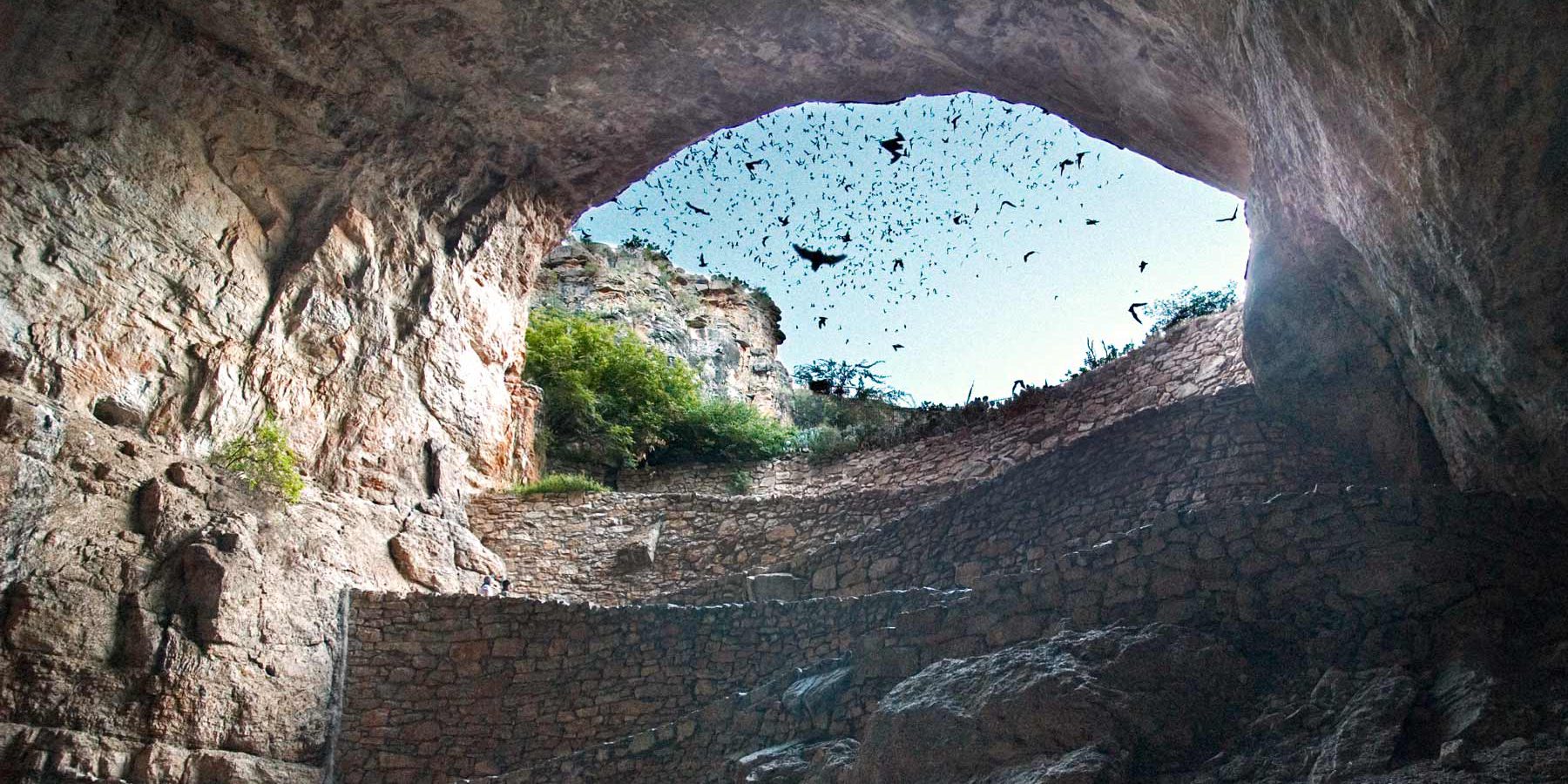
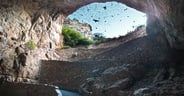
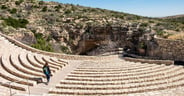
- Bat Flight Program. Hundreds of thousands of Brazilian free-tailed bats return to Carlsbad Cavern in April and stay through October. From late May-October, an evening program at the Bat Flight Amphitheater is offered every night prior to the bats making their grand exit from the cave! No reservations are required and the start time for the program changes as the sunset time changes throughout the year. Note: If you visit between late April and Memorial Day weekend, you can still watch the bats as they exit the cavern at dusk.
- Dawn of the Bats. Bats are nocturnal animals. They sleep all day, hunt all night, then return to the cave at dawn. While watching their mass exodus from the cavern each evening is a nightly tradition, annually on the third Saturday of July, folks gather at dawn to watch their return to the cave.
- Night Sky Programs. On several nights throughout the late spring, summer, and early fall, Star Parties and Night Hikes are offered by rangers. With the clear skies and lack of city lights nearby, you are (nearly) guaranteed the best night sky viewing you’ll ever experience.

Special Precautions
A disease known as white-nose syndrome is killing bats in North America. To prevent it from spreading, do not wear shoes, clothing, or gear into any cave at Carlsbad Caverns that were worn/used in another cave.
Freedom in a Can
You might also like


